Latest Articles

  • NVIDIA® ConnectX NIC Series Overview and Comparison

    In today's data-driven world, high-performance networking is essential for powering the most demanding applications. As businesses and industries continue to embrace digital transformation, the need for efficient, scalable, and low-latency networking solutions has never been greater. The NVIDIA® ConnectX family of NICs leads the industry with advanced hardware offloading and acceleration, offering the best ROI and lowest total cost of ownership for hyperscale environments, clouds, storage, AI, and more.
     
     
    NVIDIA® ConnectX Series Comprehensive Guide
    The ConnectX series, including the ConnectX-5 EN, ConnectX-6 DX, ConnectX-6 Lx, and newer models like the ConnectX-7 and ConnectX-8, offers a comprehensive range of NICs designed to meet diverse networking requirements.
    NVIDIA® ConnectX Ethernet Adapters
    1. ConnectX-5 EN
    Key Features:
     
    High Performance: 
     
    Up to two 100GbE ports, 750ns latency, and 200 million messages per second
     
    Storage Acceleration: 
     
    Hardware accelerations: T10-DIF, PCIe switch, NVMe-oF offloads
     
    Efficient Offload: 
     
    Offloads Open vSwitch to improve packet processing and reduce CPU usage
     
    Flexible Form Factors: 
     
    Supports PCIe Gen 3.0/4.0; available in PCIe, OCP 2.0, and OCP 3.0 with Multi-Host® and Socket Direct®
    Use Cases: Ideal for cloud and telecom data centers, enhancing packet processing efficiency and reducing CPU usage. They also accelerate storage-intensive workloads with advanced hardware offloads like NVMe-oF and T10-DIF.
    2. ConnectX-6 Lx
    Key Features:
     
    High Performance: 
     
    Provides connectivity at 25GbE speeds, with support for up to two 25GbE ports or one 50GbE port.
     
    Security Features: 
     
    Offers advanced security capabilities for enterprise data centers.
     
    Cost Efficiency: 
     
    Delivers the best total cost of ownership for modern infrastructure.
     
    PCIe Support: 
     
    Compatible with PCIe Gen3 and Gen4 x8 host interfaces.
    Use Cases: Ideal for cloud, data centers, and edge environments handling modern workloads.
    3. ConnectX-6 Dx
    Key Features:
     
    High Performance: 
     
    Supports up to two 100Gb/s or one 200Gb/s Ethernet ports for enhanced throughput.
     
    Network Offloads: 
     
    Offloads switching, routing, SR-IOV, and VirtIO to reduce CPU usage and improve efficiency.
     
    Built-in Security: 
     
    Includes encryption and packet filtering for robust protection.
     
    Storage Acceleration: 
     
    Enhances RoCE and NVMe-oF performance for modern storage workloads.
    Use Cases: Optimized for cloud, data center workloads including security, AI, and storage.
    4. ConnectX-7
    Key Features:
     
    High Throughput: 
     
    Up to four ports and 400Gb/s throughput for high-bandwidth needs.
     
    Advanced Networking: 
     
    Supports ASAP2, RoCE, and GPUDirect Storage for high-performance networking.
     
    Security Offloads: 
     
    Hardware acceleration for TLS, IPsec, and MACsec encryption/decryption.
     
    Data Center Scalability: 
     
    Designed for cloud, telecommunications, AI, and enterprise workloads.
    Use Cases: Optimized for cloud, telecommunications, AI, and enterprise data center workloads, especially in high-bandwidth and high-density environments.
    NVIDIA® ConnectX InfiniBand Adapters
    1. ConnectX-5
    Key Features:
     
    High Performance: 
     
    Up to two 100Gb/s ports for InfiniBand and Ethernet connectivity with low latency.
     
    RDMA-enabled: 
     
    Provides advanced application offload capabilities for HPC, cloud hyperscale, and storage platforms.
     
    Hardware Offloads: 
     
    Includes PCIe switch and NVMe over Fabrics offloads for improved efficiency.
     
    Form Factor Options: 
     
    Available in PCIe Gen3/Gen4 and OCP Spec 2.0, with Multi-Host and Socket Direct technologies in selected models.
    Use Cases: Designed for high-performance computing (HPC), cloud hyperscale, and storage platforms, particularly for environments requiring high-speed networking and offloads.
    2. ConnectX-6
    Key Features:
     
    High Performance: 
     
    Up to two 200Gb/s InfiniBand and Ethernet ports with low latency and high message rate.
     
    NVIDIA In-Network Computing: 
     
    Includes smart offloads and In-Network Computing acceleration for improved efficiency.
     
    Broad Compatibility: 
     
    Works within the NVIDIA Quantum InfiniBand platform for scalability and performance.
     
    Advanced Applications: 
     
    Designed to optimize performance for HPC, AI, cloud, hyperscale, and storage platforms.
    Use Cases: Optimized for high-performance computing (HPC), artificial intelligence, cloud, hyperscale, and storage platforms, where performance and scalability are critical.
    3. ConnectX-7
    Key Features:
     
    High Speed: 
     
    Supports speeds up to 400Gb/s with InfiniBand and Ethernet protocols.
     
    Scalable Solutions: 
     
    Offers advanced, scalable, and secure networking for various applications.
     
    Broad Use Cases: 
     
    Designed to address both traditional enterprise needs and demanding workloads.
     
    Support for Demanding Workloads: 
     
    Optimized for AI, scientific computing, and hyperscale cloud data center environments.
    Use Cases: Designed for AI, scientific computing, and hyperscale cloud data center workloads, as well as traditional enterprise needs.
    4. ConnectX-8
    Key Features:
     
    High Speed: 
     
    Supports up to 800Gb/s InfiniBand and Ethernet networking.
     
    Optimized for AI: 
     
    Designed to accelerate hyperscale AI computing workloads.
     
    Efficient Connectivity: 
     
    Delivers fast, efficient network connectivity for enhanced system performance.
     
    Cloud Support: 
     
    Enhances performance in AI factories and cloud data center environments.
    Use Cases: Optimized for hyperscale AI computing workloads, particularly for AI factories and cloud data center environments.
    Provided NVIDIA® NIC Comparison
    Compufox offers a range of high-performance NVIDIA® Ethernet NICs and NVIDIA® InfiniBand NICs designed to meet the needs of various application scenarios. ConnectX NIC series supports speeds ranging from 25G to 400G, catering to the needs of small to large-scale enterprises and data centers. The following are NVIDIA® ConnectX series models offered by Compufox.


    ConnectX Series
    Products
    Techonology
    Ports
    Host Interface
    Data Transmission Rate
    IB RDMA/RoCE
    ConnectX-5 EN
    MCX516A-CCAT
    Ethernet
    Dual-Port QSFP28
    PCIe 3.0 x 16
    100/50/40/25/10/1Gb/s
    RoCE
    MCX515A-CCAT
    Ethernet
    Single-Port QSFP28
    PCIe 3.0 x 16
    100/50/40/25/10/1Gb/s
    RoCE
    ConnectX-6 Lx
    MCX631102AN-ADAT
    Ethernet
    Dual-Port SFP28
    PCIe 4.0 x 8
    25/10/1Gb/s
    RoCE
    ConnectX-6 Dx
    MCX623106AN-CDAT
    Ethernet
    Dual-Port QSFP56
    PCIe 4.0 x 16
    100/50/40/25/10/1Gb/s
    RoCE
    MCX621202AC-ADAT
    Ethernet
    Dual-Port SFP28
    PCIe 4.0 x 8
    25/10/1Gb/s
    RoCE
    ConnectX-7
    MCX75510AAS-NEAT
    InfiniBand
    Single-Port OSFP
    PCIe 5.0 x 16
    NDR/NDR200/HDR/HDR100/EDR/FDR/SDR
    IB RDMA
    ConnectX-6 VPI
    MCX653105A-HDAT-SP
    Ethernet, InfiniBand
    Single-Port QSFP56
    PCIe 4.0 x 16
    HDR and 200Gb/s
    IB RDMA, RoCE
    MCX653106A-ECAT-SP
    Ethernet, InfiniBand
    Dual-Port QSFP56
    PCIe 4.0 x 16
    HDR and 100Gb/s
    IB RDMA, RoCE
    MCX653105A-ECAT-SP
    Ethernet, InfiniBand
    Single-Port QSFP56
    PCIe 4.0 x 16
    HDR and 100Gb/s
    IB RDMA, RoCE
    MCX653106A-HDAT-SP
    Ethernet, InfiniBand
    Dual-Port QSFP56
    PCIe 4.0 x 16
    HDR and 200Gb/s
    IB RDMA, RoCE
    ConnectX-7 VPI
    MCX75310AAS-NEAT
    Ethernet, InfiniBand
    Single-Port OSFP
    PCIe 5.0 x 16
    IB: NDR/NDR200/HDR/HDR100/EDR/FDR/SDR
    Eth: 400/200/100/50/40/10/1Gb/s
    IB RDMA, RoCE
    MCX75310AAC-NEAT
    Ethernet, InfiniBand
    Single-Port OSFP
    PCIe 5.0 x 16
    IB: NDR/NDR200/HDR/HDR100/EDR/FDR/SDR
    Eth: 400/200/100/50/40/10/1Gb/s
    IB RDMA, RoCE
    MCX755106AS-HEAT
    Ethernet, InfiniBand
    Dual-Port QSFP112
    PCIe 5.0 x 16
    IB: NDR200/HDR/HDR100/EDR/FDR/SDR
    Eth: 200/100/50/25/10Gb/s
    IB RDMA, RoC
     
    This table compares the key features of Compufox offered NVIDIA® ConnectX series to help select the most suitable solution based on your organization's needs.
    Summary

    With the increasing demand for high-speed, low-latency, and scalable networking, choosing the right NIC is essential to maximize application performance and investment value. By reviewing the comparison tables and feature overviews, you can confidently identify the model that best aligns with your performance, scalability, and budget requirements. For more information, please visit COMPUFOX.COM.

    Read more
  • SAS Cables

    SAS stands for  Serial-attached SCSI. SAS cables are used to connect devices such as hard disk drives (HDDs), solid-state drives (SSDs), and CD-ROM drives in a serial point-to-point interface. It's an evolution of the traditional parallel SCSI interface. 

    Key features of SAS cables:

    • Serial Communication: Data is transferred serially, rather than in parallel.
    • Differential Signaling: They use a set of four wires as two differential signal pairs for faster and more reliable data transfer.
    • Full-Duplex: Data can be transmitted in both directions simultaneously.
    • Ports and Physical Links: SAS physical links are grouped into ports.
      • Wide Ports: Contain multiple SAS physical links, enhancing performance and providing redundancy.
    • Connectors: Two main types of SAS connectors exist:
      • Mini SAS
      • Mini SAS HD (High Density) High-density cables are generally needed for faster speeds like 6 Gb/s SAS. 

    Speed and Performance:

    • SAS offers higher data transfer rates compared to SATA.
    • SAS-3 can achieve speeds up to 12 Gb/s, with newer versions supporting even higher speeds.
    • SAS-4 is available with speeds up to 24 Gbps.
    • The full-duplex transmission supports up to 12.0 Gbps.
    • Mini-SAS HD SFF-8644 cables can provide 48 Gb/s bandwidth by combining four 12Gb/s connections. 

    SAS vs. SATA:

    • Speed: SAS is generally faster than SATA.
    • Performance: SAS offers better performance, especially in environments requiring fast data access.
    • Compatibility: SAS interfaces are backward compatible with SATA drives.
    • Reliability and Scalability: SAS generally offers greater reliability and scalability, making it suitable for enterprise-level storage systems.
    • Cost: SATA drives are typically more cost-effective than SAS drives.
    • Use Cases: SAS is commonly used in servers and workstations for its speed and versatility. SATA is often found in personal computers and consumer devices. 


    Where to buy SAS cables:

    You can find SAS cables at https://www.compufox.com/SAS-Cables-s/3260.htm

    In summary, SAS cables are a high-performance solution for connecting storage devices, particularly in server and enterprise environments, offering faster data transfer speeds and greater scalability compared to SATA. They utilize a serial point-to-point interface and come in various configurations, including Mini SAS and Mini SAS HD connectors.


    Read more
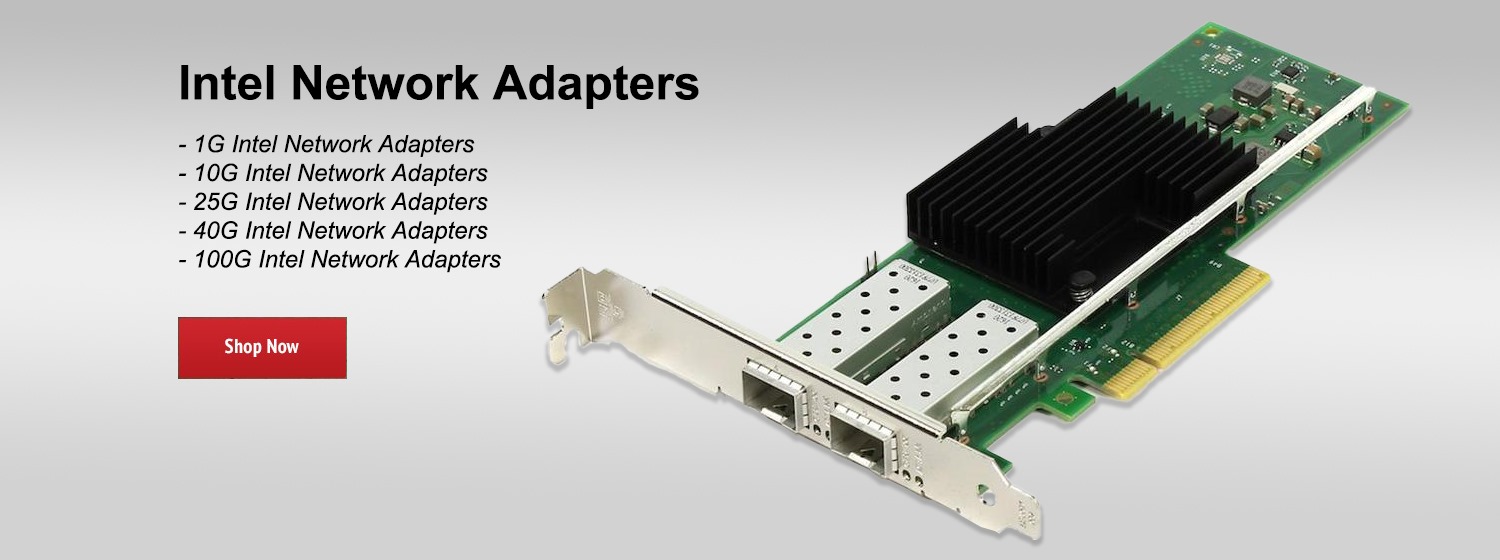
  • Intel Network Adapters

    Intel manufactures a wide range of network adapters, both wired (Ethernet) and wireless (Wi-Fi and Bluetooth), for various applications, from desktop computers to servers and data centers. 

    Wired Ethernet Adapters:

    Intel offers a diverse selection of Ethernet adapters categorized by series and speed, including: 

    • 800 Series: Up to 200GbE, supports RDMA and Dynamic Device Personalization (DDP).
    • 700 Series: Up to 40GbE, focuses on interoperability and performance optimizations.
    • 600 Series: Up to 10GbE.
    • 500 Series: Up to 10GbE, backward compatible with 1000Base-T networks.
    • Gigabit Ethernet Adapters: Up to 2.5GbE, including the I350, I226, I225, and I210 series. 

    Some specific Intel Ethernet adapter models mentioned in the search results include:

    • Intel® Ethernet Server Adapter I350 series: Features like Energy Efficient Ethernet (EEE) and DMA Coalescing (DMAC) for power management.
    • Intel® Ethernet Network Adapter X710 series: Offers multi-port configurations and load balancing technology.
    • Intel® Ethernet Converged Network Adapter X550: Supports RJ45 10GbE connections.
    • Intel® Ethernet Network Adapter E810 series: Dual SFP28 ports supporting speeds up to 25/10/1GbE. 

    Wireless Adapters:

    Intel offers various wireless adapters with Wi-Fi and Bluetooth capabilities, often combined into single adapters: 

    • Intel Killer Wi-Fi: Including the Killer Wi-Fi 6E AX1675 PCIe card.
    • Intel Wireless-AC: Including the AX210, AX201, AX200, 9560, 9461, 9260 series.
    • Intel Dual Band Wireless-AC: Including the 8265, 3168, 8260, 3165 series.
    • Intel Wireless-N: Including the 7265 series.
    • Intel Centrino Wireless-N: Including the 2230, 130, 105, 135 series.
    • Intel Wireless-AC with Bluetooth: For example, the 8265.NGWMG supports Bluetooth 4.2. 

    Key Features of Intel Network Adapters:

    • Performance: Intel adapters deliver increased wired networking throughput and offer features like load balancing for multi-processor systems.
    • Efficiency: Many models include Energy Efficient Ethernet (EEE) functionality to reduce power consumption.
    • Virtualization Support: Intel Virtualization Technology (Intel VT) enhances I/O performance for virtualized server environments.
    • Security: Intel wireless adapters support security protocols like Wi-Fi Protected Access (WPA) and Advanced Encryption Standard (AES).
    • Connectivity: Wireless adapters include Bluetooth for connecting peripherals wirelessly. 


    Where to Find Intel Network Adapters:

    You can find Intel network adapters at https://www.compufox.com/Intel-Network-Adapters-s/3048.htm

    Read more
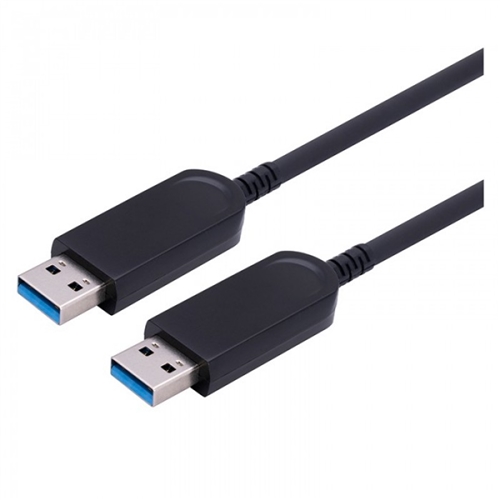
  • USB AOC AM to AM Cables

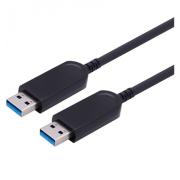
    A USB AOC AM to AM cable is an Active Optical Cable (AOC) with a USB Type-A Male connector on both ends. These cables utilize fiber optics for data transmission, allowing for longer cable lengths and faster speeds compared to traditional copper USB cables. 

    Here's a breakdown of what this means:

    AOC (Active Optical Cable):

    • AOCs use optical fiber to transmit data, converting electrical signals to light at one end and back to electrical signals at the other end.
    • This allows for higher bandwidth and longer distances than copper cables without signal loss or degradation. 

    USB Type-A Male:

    • This is the standard, rectangular USB connector commonly found on computers and other host devices.
    • "AM" indicates that the connector on both ends is a Type-A Male. 

    In essence, a USB AOC AM to AM cable provides a high-speed, long-distance USB connection using optical fiber technology, with a standard USB Type-A male connector on each end. 

    Key Features & Benefits:

    • High Bandwidth: Supports USB 3.0 and USB 3.1 standards, allowing for high data transfer rates (e.g., 5 Gbps for USB 3.0 and 10 Gbps for USB 3.1 Gen 2).
    • Long Distance: Can extend USB connections much farther than traditional copper cables, often up to 100 meters or more, depending on the specific cable and USB standard.
    • Low Signal Loss: Fiber optic transmission minimizes signal degradation over long distances, ensuring reliable data transfer.
    • EMI/RFI Resistance: Offers better resistance to electromagnetic and radio frequency interference compared to copper cables. 

    Applications:

    • Industrial and Machine Vision: Connecting cameras, sensors, and other devices over long distances in industrial settings.
    • Medical Imaging: Transmitting high-resolution medical images and data.
    • Conference Rooms and Auditoriums: Connecting USB devices like cameras and touchscreens in larger spaces.
    • Remote Desktop USB 3.0 Connections: Extending USB connections to remote workstations.
    • Security and Surveillance: Connecting security cameras and other monitoring equipment.
    • AR/VR: Connecting VR headsets and other peripherals requiring high bandwidth and low latency. 

    Important Considerations:

    • Power Delivery: Pure fiber USB AOCs typically do not transmit power, so devices connected through them may require separate power sources. Hybrid AOCs incorporate copper wires for power delivery in addition to fiber for data.
    • Cost: AOCs are generally more expensive than standard copper USB cables.
    • Compatibility: Ensure compatibility with the specific USB standard and connector type of the devices you intend to connect.

    USB 3.1 Gen 2 Type-A Male to Type-A Male 10G Hybrid Active Optical Cable, Backward Compatible.

    The AOC-U31-AM-AM USB 3.1 A male to A male AOC is a 10Gbps USB 3.1 GEN 2 active optical cable which is downward compatible with USB 2.0. It is designed for PC USB to peripheral devices with superior performance while providing a reliable plug-and-play user experience. It supports length up to 15m. Its suitable for applications that do not have on-site power supply. This optical fiber cable can be applied to machine vision, Remote monitoring, etc.
     
    Features
    • Meet USB 3.1 GEN 2 Standard , bandwidth can reach to 10Gbps super speed
    • Support length up to 15m
    • Support 5V 900mA max
    • Support two sides plug and play on type C connector
    • Support downward compatible with USB2.0/1.1
    • No RF interference , working stable in complex environments
     
    Specifications
    • Maximum length: 15m
    • Connector
      • Type: A (male) / A (male)
      • Contacts: Gold plated, long-life design
    • Wire
      • Cable diameter: 4.85 mm
      • Bend radius: 40 mm static / 80 mm dynamic
      • Jacket: PVC
    • Mechanical
      • Supply voltage: 4.75 – 5.25 V
      • Power consumption: < 0.50 W (both sides)
      • Operating conditions: -20°C ~ 70°C, 0%-85% humidity
    • Safety
      • Device: CE
      • EMI / EMC: FCC Class B, CISPR 32

    USB Connector Type Reference Chart

    USB 2.0 Type A
    USB 3.0 Type A
    USB 3.1 Type A
    USB Connector Type Reference Chart | Compufox.com
    USB 2.0 Type C
    USB 3.0 Type C
    USB 3.1 Type C
    USB Connector Type Reference Chart | Compufox.com
    USB 2.0 Type B

    USB Connector Type Reference Chart | Compufox.com
    USB 3.0 Type B

    USB Connector Type Reference Chart | Compufox.com
    USB 2.0 Micro B

    USB Connector Type Reference Chart | Compufox.com
    USB 3.0 Micro B

    USB Connector Type Reference Chart | Compufox.com
    USB 2.0 Mini B
    USB 3.0 Mini B

    USB Connector Type Reference Chart | Compufox.com


    Read more
  • USB AOC AM to Micro-B Cables


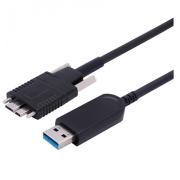
    USB 3.0 AM to Mirco B Active Optical Cable – compufox.com

    A USB AOC AM to Micro-B cable is a specialized type of USB cable that utilizes active optical cable (AOC) technology to extend the reach of USB connections beyond the typical limitations of copper cables.

    Here's a breakdown of its key features and applications:

    1. What it is:

    AOC (Active Optical Cable): AOCs combine copper wires for power delivery and optical fibers for data transmission.

    USB AM (Type-A Male): The standard, rectangular USB connector commonly found on computers and laptops.

    Micro-B: A smaller USB connector often used for peripherals like older Android phones, external hard drives, and some cameras.

    2. How it works:

    The USB Type-A end connects to a host device (e.g., computer), while the Micro-B end connects to a peripheral.

    The cable converts the electrical USB data signal into optical signals, which are transmitted through the fiber optic core.

    At the receiving end, the optical signals are converted back into electrical signals for the device to use.

    Copper wires within the cable provide power to the active components and the connected device.

    3. Advantages:

    Longer distances: AOC technology allows for significantly longer cable lengths (e.g., 10 meters or more) compared to standard copper USB cables, which are typically limited to a few meters.

    High bandwidth: Supports USB 3.0/3.1/3.2 speeds for fast data transfer.

    Reduced EMI/RFI: Fiber optic cables are immune to electromagnetic interference, making them suitable for environments with high electrical noise.

    Thin and flexible: Despite the advanced technology, AOC cables are often thinner and more flexible than traditional copper cables, making them easier to manage.

    4. Applications:

    Industrial Machine Vision: Connecting high-resolution cameras to computers over long distances for image processing.

    Medical Imaging: Connecting medical devices and cameras to workstations.

    Remote Device Connections: Extending the reach of USB peripherals like external hard drives, scanners, and printers.

    Conference Rooms & Digital Signage: Connecting displays, webcams, and other devices over extended distances.

    5. Considerations:

    Cost: AOC cables are typically more expensive than standard copper USB cables due to the advanced technology involved.

    Power Delivery: While AOC cables can deliver power to devices, the amount of power may be limited, especially over longer distances.

    Compatibility: Ensure the AOC cable is compatible with the USB version and speed requirements of your devices.

    In summary, a USB AOC AM to Micro-B cable offers a high-performance solution for extending USB connections over longer distances, especially in applications where high bandwidth, low interference, and flexibility are crucial.


    USB 3.1 Gen 2 Type-A Male to Micro-B Male 10G Hybrid Active Optical Cable, Backward Compatible.


    The Hybrid AOC cabling technology uses copper wires and optical fibers to join the electrical connectors on each end of the cable. The result is improved speed and bandwidth transmission distances with a thinner cable that is flexible and lightweight. This AOC-U31-AM-MB USB 3.1 Gen 2 AM-BM AOC cables are designed for PC USB to peripheral devices with superior performance while providing a reliable plug-and-play user experience.
     
    Features
    • USB 3.1 Gen 2 and full bandwidth of 10Gbps
    • Variety of pre-assembled cable lengths available, up to 15m
    • Support 5V 900mA max
    • Patented AOC hybrid-cable with only 5 mm bend radius
    • Supports both USB 2.0 and 3.1 in same cable up 50 meters
    • For data transfers of up to 10G, no charging or powering of devices
    • EMI (electromagnetic interference) protection
     
    Specifications
    • Maximum length: 15m
    • Connectors
      • Type: Type-A (male) to Micro-B (male)
      • Contacts: Gold plated, long-life design
    • Wire
      • Cable diameter: 4.85 mm
      • Bend radius: 40 mm static / 80 mm dynamic
      • Jacket: PVC, CMR / CMP, CPR Eca
    • Mechanical
      • Supply voltage: 4.75 – 5.25 V
      • Power consumption: < 1 W (both sides)
      • Operating conditions: -20°C ~ 70°C, 0%-85% humidity
    • Safety
    • Device: CE, FCC
    • EMI / EMC: CISPR 32
     
     
    Read more

Latest Articles

  • NVIDIA® ConnectX NIC Series Overview and Comparison
    NVIDIA® ConnectX NIC Series Overview and Comparison
    In today's data-driven world, high-performance networking is essential for powering the most demanding applications. As...
  • SAS Cables
    SAS Cables
    SAS stands for Serial-attached SCSI. SAS cables are used to connect devices such as hard disk drives (HDDs), solid-state drives...
  • Intel Network Adapters
    Intel Network Adapters
    Intel manufactures a wide range of network adapters, both wired (Ethernet) and wireless (Wi-Fi and Bluetooth), for various...
  • USB AOC AM to AM Cables
    USB AOC AM to AM Cables
    A USB AOC AM to AM cable is anActive Optical Cable(AOC) with a USB Type-A Male connector on both ends. These cables utilize...
  • USB AOC AM to Micro-B Cables
    USB AOC AM to Micro-B Cables
    USB 3.0 AM to Mirco B Active Optical Cable – compufox.com A USB AOC AM to Micro-B cable is a specialized type of USB...

Most Popular